Tuesday, June 21, 2011

APPLE MacBook MC516B/A Price in India

APPLE MacBook MC516B/A the Apple MacBook MC516B/A a sight to behold, and is powered by a zippy 2.4GHz Intel® Core™2 Duo Mobile Processor P8600 and runs Apple's advanced Mac OS X v10.6 Snow Leopard operating system. Thanks to a capacious 250GB Hard Drive, you'll have no trouble storing memory-hungry downloads, multimedia files and documents, while 2GB of Memory enables you to run your applications seamlessly, even when multitasking. 

APPLE MacBook MC516B/A Price in India


Operating System Mac OS X v10.6 Snow Leopard
RAM - 2 GB 1066 MHz DDR3 memory
- 4 GB maximum memory capacity
Graphics card NVIDIA GeForce 320M graphics processor
- 256 MB DDR3 SDRAM shared with main memory
Screen type LCD widescreen
Screen resolution 1280 x 800
Screen size 13.3-inch
Screen features LED backlight
Glossy
16:10 aspect ratio
Hard drive 250 GB SATA 5400 rpm
Optical disk drive 8x slot-loading SuperDrive (DVD±R DL/DVD±RW/CD-RW)
Memory card reader No
USB 2 x USB 2.0

DELL Inspiron 15R 4GB Core i3 Lapto


  • DELL Inspiron 15R 4GB Core i3 Lapto
  • General Information
  • RAM 4 GB DDR3
  • Graphics card Intel GMA graphics with shared video memory
  • Screen type LCD widescreen
  • Screen resolution - WXGA
  • - 1366 x 768
  • Screen size 15.6"
  • Screen features LED backlight
  • Hard drive 500 GB SATA, 5400 rpm
  • Optical disk drive DVD+/-RW
  • Memory card reader 7-in-1 memory card reader
  • USB 3 x USB 2.0
  • FireWire No
  • Modem/Ethernet 10/100 LAN (RJ45)
  • WiFi WiFi 802.11 g/n
Dell Inspiron 15R 15.6" Laptop comes with 4GB or RAM and a roomy 500GB hard drive. It is powered by the Intel® Core™ i3-380M Processor and runs the Genuine Windows® 7 Home Premium operating system.

DELL Inspiron 15R 4GB Core i3 Laptop

  • DELL Inspiron 15R 4GB Core i3 Laptop Price in India Processor Intel® Core™ i3-380M Processor
  • - 2.53 GHz
  • - 2.5 GT/s DMI
  • - 3 MB Smart Cache
  • - Dual Core
  • Operating System Genuine Windows® 7 Home Premium
  • RAM 4 GB DDR3
  • Graphics card Intel GMA graphics with shared video memory
  • Screen type LCD widescreen
  • Screen resolution - WXGA
  • - 1366 x 768
  • Screen size 15.6"
  • Screen features LED backlight
  • Hard drive 500 GB SATA, 5400 rpm
Dell Inspiron 15R 15.6" Laptop is everything you need for surfing the web, keeping in contact with friends and family via email or webcam chat, watching DVD movies with the built-in DVD rewriter drive, and possibly even doing a bit of work from time to time!

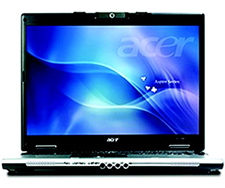
ACER 5742 Core i3 laptop

ACER 5742 Core i3 laptop Price in India  Acer Aspire 5742 laptop comes with the dual-core Intel Core™ i3-370M Processor, to seamlessly run the Microsoft Genuine Windows 7 Home Premium operating system. A generous 320GB hard drive provides ample storage space for a large multimedia collection, while the 3GB of RAM ensures swift multitasking performance.


  • Intel® Core™ i3-370M processor
  • Genuine Windows® 7 Home Premium 64-bit
  • Memory: 3GB
  • Hard drive: 320GB
  • Find out more
  •  Available for home delivery


Monday, August 11, 2008

Health issues

A study by State University of New York researchers says heat generated from laptops can significantly elevate the temperature of the scrotum, potentially putting sperm count at risk. The small study, which included little more than two dozen men ages 13 to 35, found that the sitting position required to balance a laptop can raise scrotum temperature by as much as 2.1 °C (3.8 °F). Heat from the laptop itself can raise the temperature by another 0.7 °C (1.4 °F), bringing the potential total increase to 2.8 °C (5.2 °F). However, further research is needed to determine whether this directly affects sterility in men. A common practical solution to this problem is to place the laptop on a table or desk.
The image “http://upload.wikimedia.org/wikipedia/en/thumb/3/39/Laptop-coaster.jpg/180px-Laptop-coaster.jpg” cannot be displayed, because it contains errors.
Heat from using laptop on lap can also cause skin discoloration on the thighs.
Because of their small keyboard and trackpad pointing devices, the use of laptops can cause RSI, and for this reason laptops have docks that are used with ergonomic keyboards to prevent injury. The integrated screen often causes users to hunch over for a better view, which can cause neck or spinal injuries. 


http://www.creativeit.tv/images/acer-laptop-screen-repair.jpg


http://laptoping.com/wp-content/Twinhead_D14.jpg

http://forevergeek.com/wp-content/uploads/2007/06/sonyvaiofz.jpg

http://afxafx.typepad.com/photos/uncategorized/lap1.jpg

http://explore.toshiba.com/images/showcase/easyGuard-hero.png
http://www.finalsense.com/news/image/laptop/lenovo-y410-laptop.jpg
The image “http://www.finalsense.com/news/image/laptop/toshiba-x205-sli.jpg” cannot be displayed, because it contains errors.

http://www.laptopsarena.com/images/ecs_g200.jpg
http://www.elitistsnob.com/images/macbook%5B10%5D.jpg

http://www.crownglobals.com/site/images/stories/news/n03022008j1.jpg
Some health standards require that ergonomic keyboards be used in workplaces.
Laptop Modal's

Performance

For a given price range (and manufacturing base), laptop computational power has traditionally trailed that of desktops. This is partly due to most laptops sharing RAM between the program memory and the graphics adapter. By virtue of their usage goals, laptops prioritize energy efficiency and compactness over absolute performance. Desktop computers and their modular components are built to fit much bigger standard enclosures, along with the expectation of AC line power. As such, energy efficiency and portability for desktops are secondary design goals compared to absolute performance.

For typical home (personal use) applications, where the computer spends the majority of its time sitting idle for the next user input, laptops of the thin-client type or larger are generally fast enough to achieve the required performance. 3D gaming, multimedia (video) encoding and playback, and analysis-packages (database, math, engineering, financial, etc.) are areas where desktops still offer the casual user a compelling advantage.

The image “http://upload.wikimedia.org/wikipedia/commons/thumb/e/ed/HPLaptopzv6000series.jpg/180px-HPLaptopzv6000series.jpg” cannot be displayed, because it contains errors.

As computer hardware miniaturization develops, laptops are beginning to close the performance gap with desktops. Intel's Core 2 line of processors is efficient enough to be used in portable computers, and many manufacturers such as Apple Inc., Lenovo and Dell are building Core 2 based laptops. Also, many high end laptop computers feature mobility versions of graphics cards, eliminating the performance losses associated with integrated graphics, while maintaining long battery life.

Laptop Parts

Most modern laptops feature 12 inch (30 cm) or larger active matrix displays with resolutions of 1024×768 pixels and above, and have a PC Card (formerly PCMCIA) or ExpressCard expansion bay for expansion cards, one or more USB ports, and a external monitor port (VGA or DVI). Most laptops have also an ethernet network port. Some have legacy ports such as a PS/2 keyboard/mouse port or a serial port, parallel port, and S-video or composite video port. Hard disks are physically smaller—2.5 inch (60 mm)—compared to the standard desktop 3.5 inch (90 mm) drive, and usually have lower performance and power consumption. Video and sound chips are usually integrated. This tends to limit the use of laptops for gaming and entertainment, two fields which have constantly escalating hardware demands, however, higher end laptops can come with dedicated graphics processors. These mobile graphics processors tend to have less performance than their desktop counterparts, but this is because they have been optimized for lower power usage. Some subsystems, such as Wi-Fi, come in contemporary laptops on replaceable MiniPCI cards, usually accessible through a door on the bottom. Memory modules (smaller than the usual DIMMs) are often also accessible through the bottom, though some may be on the motherboard under the keyboard and thus not meant to be accessed by the user.

2.5" hard disk drive

The image “http://upload.wikimedia.org/wikipedia/commons/thumb/f/fa/Dell_laptop_hard_disk.jpg/800px-Dell_laptop_hard_disk.jpg” cannot be displayed, because it contains errors.

There is a wide range of laptop specific processors available from Intel (Pentium M, Celeron, Intel Core and Intel Core 2), AMD (Athlon, Turion 64, and Sempron) and from VIA (C3 and C7-M). Motorola and IBM developed and manufactured the chips for the former PowerPC-based Apple laptops (iBook and PowerBook). Generally, laptop processors are less powerful than their desktop counterparts, due to the need to save energy and reduce heat dissipation.

Current models of laptops utilize lithium ion batteries with more recent models using the new lithium polymer technology. These technologies have largely replaced the older nickel metal-hydride batteries. Typical battery life for most laptops is two to five hours with light-duty use, but may drop to as little as one hour with intensive use. Batteries gradually deteriorate over time and eventually need to be replaced in one to five years, depending on the charging and discharging pattern.

Laptops typically use SODIMMs, as shown here.

Laptops typically use SODIMMs, as shown here.

Docking stations became another common laptop accessories in the early 1990s. They typically were quite large and offered 3.5" and 5.25" storage bays, one to three expansion slots (typically AT style), and a host of connectors. The mating between the laptop and docking station was typically through a large, high-speed, proprietary connector. The most common use was in a corporate computing environment where the company had standardized on a common network card and this same card was placed into the docking station. These stations were very large and quite expensive. As the need to additional storage and expansion slots became less critical because of the high integration inside the laptop itself, the emergence of the Port Replicator as a major accessory commenced. The Port Replicator was often a passive device that simply mated to the connectors on the back of the notebook and allowed the user to quickly connect his laptop so VGA, PS/2, RS-232, etc. devices were instantly attached. As higher speed ports like USB and Firewire became commonplace, the Port Replication was accomplished by a small cable connected to one of the USB 2.0 or FireWire ports on the notebooks. Wireless Port Replicators followed.

Virtually all laptops can be powered from an external AC converter. This device typically adds half a kilogram (1 lb) to the overall "transport weight" of the equipment.

A pointing stick or touchpad is used to control the position of the cursor on the screen. The pointing stick is usually a rubber dot that is located between the G, H and B keys on the laptop keyboard. To navigate the cursor, pressure is applied in the direction intended to move. The touchpad is touch-sensitive and the cursor can be navigated by moving the finger on the pad.

Intel, Asus, Compal, Quanta and other laptop manufacturers have created Common Building Block standard for laptop parts.